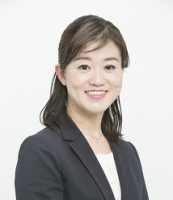
Yuki Akino is Professor of Cultural Policy at Waseda University. Her research examines the historical formation of cultural-policy ideas and institutions, as well as contemporary policy challenges, with a primary focus on Germany, Japan, and the United States. Building on her research on German cultural policy, she has comparatively examined how concepts such as “culture,” “art,” “the artist,” “the state,” and “the citizen,” which took shape within European modernity, have been transferred, translated, and transformed across different societies. More recently, she has extended her work to the reconstruction of cultural policy in the age of generative AI. Throughout her research, her work has consistently been guided by a concern with the power structures surrounding culture.
Akino earned her doctorate through the Institute for Cultural Policy at the University of Hildesheim, Germany and Tokyo University of Foreign Studies, Japan. After serving as a JSPS-Postdoctoral Fellow at the University of Tokyo, she held positions as Lecturer and Associate Professor at Dokkyo University and was a Visiting Scholar in the Department of Art History and Archaeology at Columbia University, USA. She has been Professor at Waseda University since 2022.
She also taught German on NHK Radio, Japan’s public broadcaster. In the policy sphere, she served as Principal Investigator and led a five-year joint research project on international comparative cultural policy with Japan’s Agency for Cultural Affairs(2021-2026). In parallel, she served as a member of a Cabinet Secretariat committee evaluating the relocation of central government agencies(2021-) and has chaired research conducted by the Japan Council of Performers Rights and Performing Arts Organizations (Geidankyo) on the social security and working conditions of professional performers(2022-). She has remained continuously engaged in policy formation and evaluation in both government and the cultural sector. Her 2019 monograph received the Encouragement Award of the Japanese Association for German Studies.
1. People and Power Structures
A defining feature of Akino’s research is that she does not approach cultural policy primarily as a matter of organizational structures—government agencies, cultural institutions, budgets, and funding systems—but instead takes people, including those who are not already represented by cultural organizations or established interest groups, as her point of departure.
Who decides what counts as culture? Whose judgment acquires authority? How are the views of audiences and residents formed and reflected in policy? Under what conditions do creators and performers produce culture, and can they sustain their livelihoods through that work? She also asks whether the glamour, enjoyment, and convenience associated with culture may rest on structures in which someone else is required to bear the cost or make the sacrifice. Through such questions, she treats the power relations embedded within institutions and systems themselves as a central problem of cultural policy.
This approach also challenges a simple binary understanding of power as a relationship between “the state” and “citizens.” Power relations also exist within civil society itself, shaping whose voices are represented, whose judgments acquire authority, and who is recognized as a legitimate participant in cultural policymaking.
2. European “Modernity” and the Relationship between Culture and Society in East Asia
Her research therefore goes beyond outward comparisons of cultural budgets, funding systems, or governmental structures across countries. Rather than taking existing institutions as given and asking only how they might be improved within their current frameworks, she asks why those institutions came into being in the first place, whose value judgments and visions of society have been built into them, and whether improvements to existing systems alone can sustainably produce a more desirable relationship between culture and society. Her research traces these questions back to the rise of the modern nation-state, the emergence of the “artist” as a professional category, and the formation of institutions such as museums and publicly funded theatres. Drawing on primary sources, she has examined how these concepts were received, translated, and transformed in Germany, Japan, and the United States. This historical inquiry provides a basis for relativizing concepts of culture and art that have often been treated as self-evident in Japan and other East Asian contexts under the influence of modernization.
3. Democratizing the Processes through which Culture Is Defined
Akino does not take culture for granted as something that inherently “enriches the mind,” provides comfort, or is simply beneficial to society. Instead, she asks how cultural value and cultural hierarchies have themselves been historically produced. What Akino places at the center of cultural policy is not the mere promotion of already established forms of culture and the arts, but the substantive democratization of the processes through which cultural value itself is formed.
4. Culture as a Foundation of Democratic Society—Intersubjectivity and Culture as a Medium of Communication
This concern is closely connected to Akino’s research on the German development from "Museumspädagogik" toward "Kulturvermittlung (cultural mediation)". Drawing on a strand of German cultural-policy thought and practice, she approaches culture not simply as a collection of “works,” but as a medium of communication between people—a perspective she regards as particularly underdeveloped in Japan when considering the relationship between culture and society and translating that understanding into policy.
She emphasizes the importance of encountering others through works of art and cultural activities—encounters with different experiences, values, and modes of thought through which people can form and revise their capacity for judgment intersubjectively. Akino argues that museums, theatres, and other cultural institutions derive their public significance from their capacity to provide such spaces of encounter. It is precisely because they enable people to engage with perspectives beyond the limits of their own experience and to develop their capacity for judgment in relation to others that, in her view, they can be understood as public spaces, rather than merely as places where works are preserved, exhibited, or presented.
5. An Ecosystem that Sustains and Respects Professional Cultural Practice
At the same time, Akino is critical of reducing cultural democratization to amateurism or simply expanding opportunities for participation. Having practiced ballet since childhood and later trained and performed in Germany and the United States, she also emphasizes the importance of respecting the professional skills and expertise developed by creators and performers and of ensuring appropriate remuneration and social protection. For her, broadening participation in culture and sustaining the professional conditions of cultural work are not opposing goals, but challenges that cultural policy must address together.
6. Digital Tools and Generative AI—From Thought Experiments to Implementation
More recently, Akino has been exploring new forms of policy practice made possible by digital tools. She is experimentally developing digital dashboard prototypes that allow users to simulate budget allocations, policy choices, and evaluation criteria. Rather than being released as finished public tools, these prototypes are demonstrated in lectures, university classes, and workshops, where participants can interact with the models and provide feedback. Through this iterative process, she is testing and refining how such tools can support policy thinking and discussion.
The aim is not to replace expert judgment or to present a predetermined “correct answer,” but to make the assumptions and trade-offs underlying policy choices more visible and to provide non-specialists with “tools for thinking” that help them form their own judgments about budgets and evaluation and discuss them with others. By interacting directly with the models and experiencing how different assumptions and conditions change the outcomes, participating organizations are also encouraged to consider why statistical data are necessary, what kinds of data they themselves need to collect, and how such data can support policy evaluation and discussion—thereby strengthening their statistical and policy literacy. Her work on cultural policy in the age of generative AI extends these broader questions into a new technological context. In this context, long-standing questions of power, value, professionalism, and democracy that have historically been embedded in cultural policy are becoming visible in new forms.
Taken together, Akino’s work connects historical research, international comparison, policy evaluation, cultural mediation, research on cultural professions, and digital practice around a single overarching concern: Who defines cultural value, who participates in that process, and who is able to sustain cultural production - under what conditions. At the heart of her research is an effort to reconceive cultural policy not simply as the management of organizations or works of art, but as the design of conditions through which people can encounter others through culture, exercise judgment, engage in dialogue, and participate democratically in shaping society.